
Reflective foil: when it works and how it is installed
Published on 29.09.2026 · Isoflect Insulation technical team
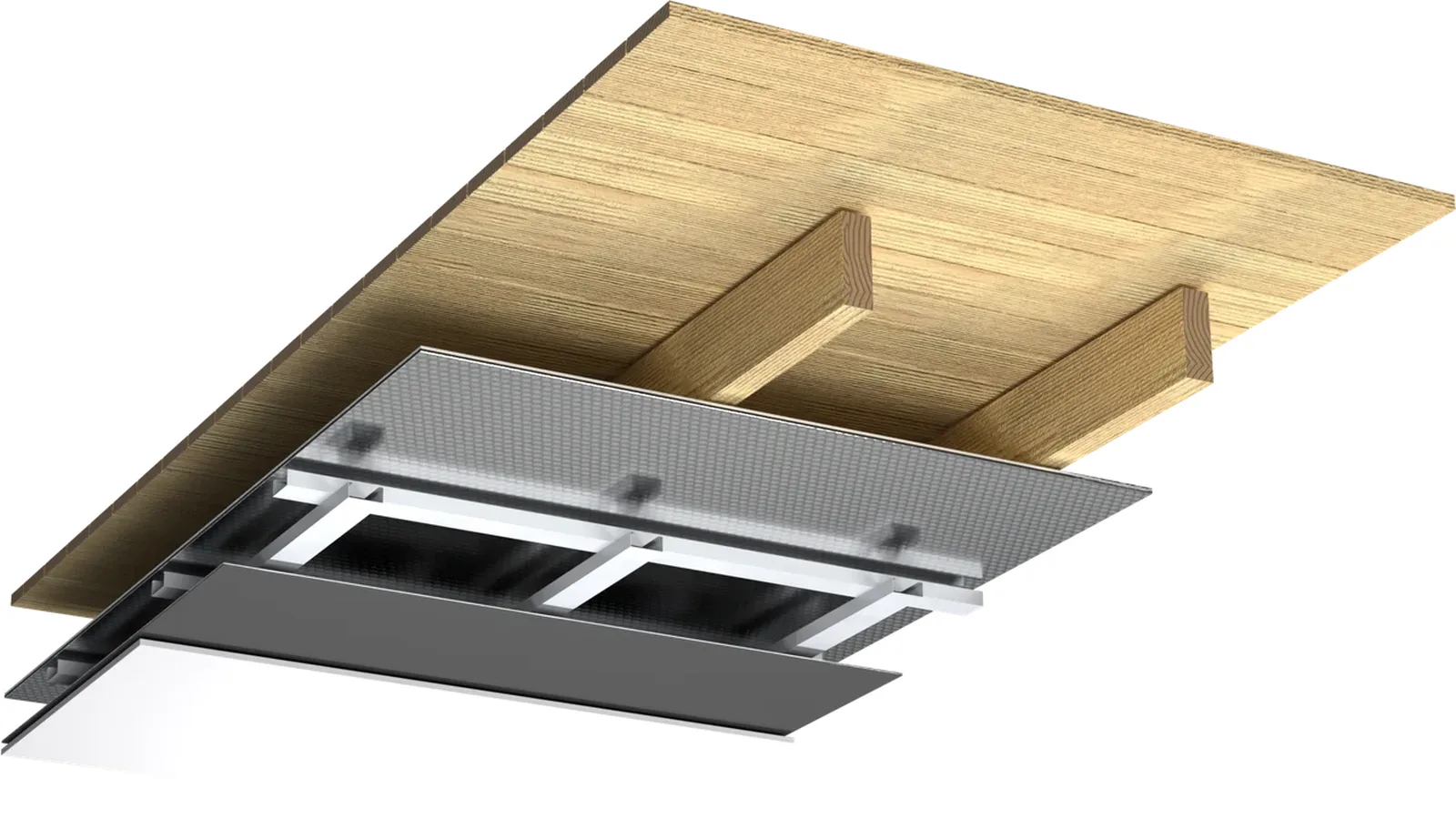
A REFLECTIVA foil installed directly between two finishing layers will not produce the effect promised by high-performance insulation. By contrast, the same membrane, installed with an air gap, sealed joints and correct positioning within the system, can limit heat transfer by radiation, control vapour and protect the structure against condensation. The difference is made not only by the product, but by the installation detail.
For a loft room, an attic, a lightweight wall or an HVAC installation, the reflective foil must be selected as part of a complete build-up. It does not automatically replace mineral wool, ecological fibre or another bulk insulation material. Each material addresses a different heat transfer mechanism, and absolute comfort is achieved when they work together.
What a reflective foil actually does
Heat is transferred by conduction, convection and radiation. Thick thermal insulation materials, such as wool or natural fibres, mainly reduce conduction and air movement within cavities. A foil with a metallised, low-emissivity surface acts in particular on thermal radiation, reflecting radiant energy back towards the zone from which it originates.
This principle is particularly useful in spaces exposed to very hot or very cold surfaces: beneath the roof covering, in loft rooms, facing a ventilated cavity, next to air ducts or in lightweight structures. In summer, a reflective surface facing the air cavity can reduce the radiant gain from the heated roof. In winter, within a correct interior build-up, it can help retain radiant energy in the room.
Actual performance depends on the declared emissivity of the reflective face, on its continuity and, above all, on the presence of an air space. If the foil is bonded to plasterboard, timber or insulation, the thermal reflection mechanism is greatly reduced. This is not a problem of the foil, but a physical condition of its operation.
Reflective foil with an air space: the detail that matters
An air gap of a few centimetres can transform a metallised membrane from a mere separating layer into an active component of the thermal system. The cavity must be continuous, as clean as possible and not obstructed by cables, randomly installed battens or materials pressed against the foil.
In a loft room, this gap is frequently obtained by installing a grid of battens between the foil and the interior lining. In a wall or beneath a floor, the configuration changes, and the product must be selected for that particular application. A foil intended for roofs is not automatically the appropriate solution beneath parquet or beneath an underfloor heating system.
The orientation of the reflective face also matters. The practical rule is that the low-emissivity surface should face the air cavity and the dominant source of radiation. However, in a multi-layer roof, the choice is not made solely according to the season. The position of the thermal insulation, the ventilation of the roof covering, vapour diffusion and the type of membrane used are all analysed.
Do not confuse reflective foil with a diffusion membrane
A diffusion membrane installed beneath the roof covering must manage incidental water and the escape of vapour from the thermal insulation layer. A vapour barrier or a vapour control membrane is generally installed towards the interior of the heated zone and limits the ingress of moisture into the structure.
Some reflective products may also integrate the function of a vapour barrier, anti-condensation layer or air seal. This is an important advantage, but only if the specifications clearly confirm these functions. A glossy surface by itself says nothing about vapour permeability, mechanical strength or condensation behaviour.
Where it delivers predictable results
In an unconverted attic, the foil can be useful beneath the roof boarding or in a build-up that limits overheating of the space, provided that it does not block the necessary ventilation of the roof. For habitable attics, the effective solution usually combines insulation between the rafters, a continuous additional layer to reduce thermal bridges and an airtight membrane towards the interior.
In the walls of lightweight constructions, reflective foil can serve as vapour control and improve radiant behaviour when an air cavity is maintained. In this case, perimeter sealing, service penetrations and connections to windows are as important as the material itself.
For ducts, ductwork and HVAC equipment, a reflective membrane can complement the duct insulation by limiting radiant exchange and by protecting against condensation. For cold ducts, the vapour barrier must be continuous. Any unsealed cut may allow humid air to reach the cold surface, where water forms and performance losses occur.
Beneath floors, only products compatible with the load, the operating temperature and the final finish are selected. For underfloor heating, a reflective surface can help direct energy upwards only if the system is correctly designed and there is adequate insulation beneath the assembly. A very thin foil cannot compensate for the absence of a compression-resistant thermal insulation layer.
Correct installation: continuity is performance
Before installation, the substrate must be dry, clean and free of elements that could perforate the membrane. The rolls are laid without excessive tensioning, with overlaps in accordance with the product instructions. The joints are bonded with compatible tape, and the edges are connected airtight to walls, beams, roof windows and service penetrations.
A membrane interrupted by dozens of perforations no longer effectively controls the flow of air and vapour. Stapling may be acceptable in certain systems, but the perforations must be protected by overlaps, tapes or fixing battens, depending on the recommended detail. At cable and pipe penetrations, dedicated sealing solutions are more reliable than improvised tape.
It is useful to separate the building services from the main membrane by means of a service cavity. In this way, cables and junction boxes do not oblige the installation team to perforate the sealing layer repeatedly. This simple decision reduces the risk of interstitial condensation and maintains the reliable performance of the assembly over the long term.
Four mistakes that reduce the effect of the foil
- Installation without an air cavity on the reflective face.
- Choosing a foil without checking its vapour barrier or diffusion function.
- Leaving joints, corners and penetrations unsealed.
- Using the foil as the sole thermal insulation in an exposed roof, wall or floor.
How to choose the product for your project
Start with the installation zone: roof, wall, floor, ducts or technical space. Then check the required functions: thermal reflection, airtightness, vapour control, anti-condensation protection, tear resistance and compatibility with the operating temperature.
Request clear data, not merely trade names: thickness, roll dimensions, area covered, emissivity, vapour permeability, tensile strength and installation recommendations. For a complete project, the accessories must also be taken into account: joint tape, connection tape, service sleeves and the fixing system that creates the air cavity.
Local building regulations may impose minimum insulation levels, requirements concerning vapour barriers or fire safety rules. These requirements differ between states and climate zones, so a solution that is good for a roof in a warm, humid region does not automatically transfer to a cold zone. For complex configurations, check the design with a local specialist and coordinate each layer with the requirements of the building.
At Isoflect, the selection can start from the specific installation area and from a package that integrates compatible materials, not merely from a roll chosen on price. Before ordering, measure the actual surface area, identify all penetrations and decide where the air gap will be located. These three pieces of information allow a solution to be configured that protects the house, rather than merely covering a surface.