
WOLLE insulation for dry and quiet habitable attics
Published on 05.10.2026 · Isoflect Insulation technical team
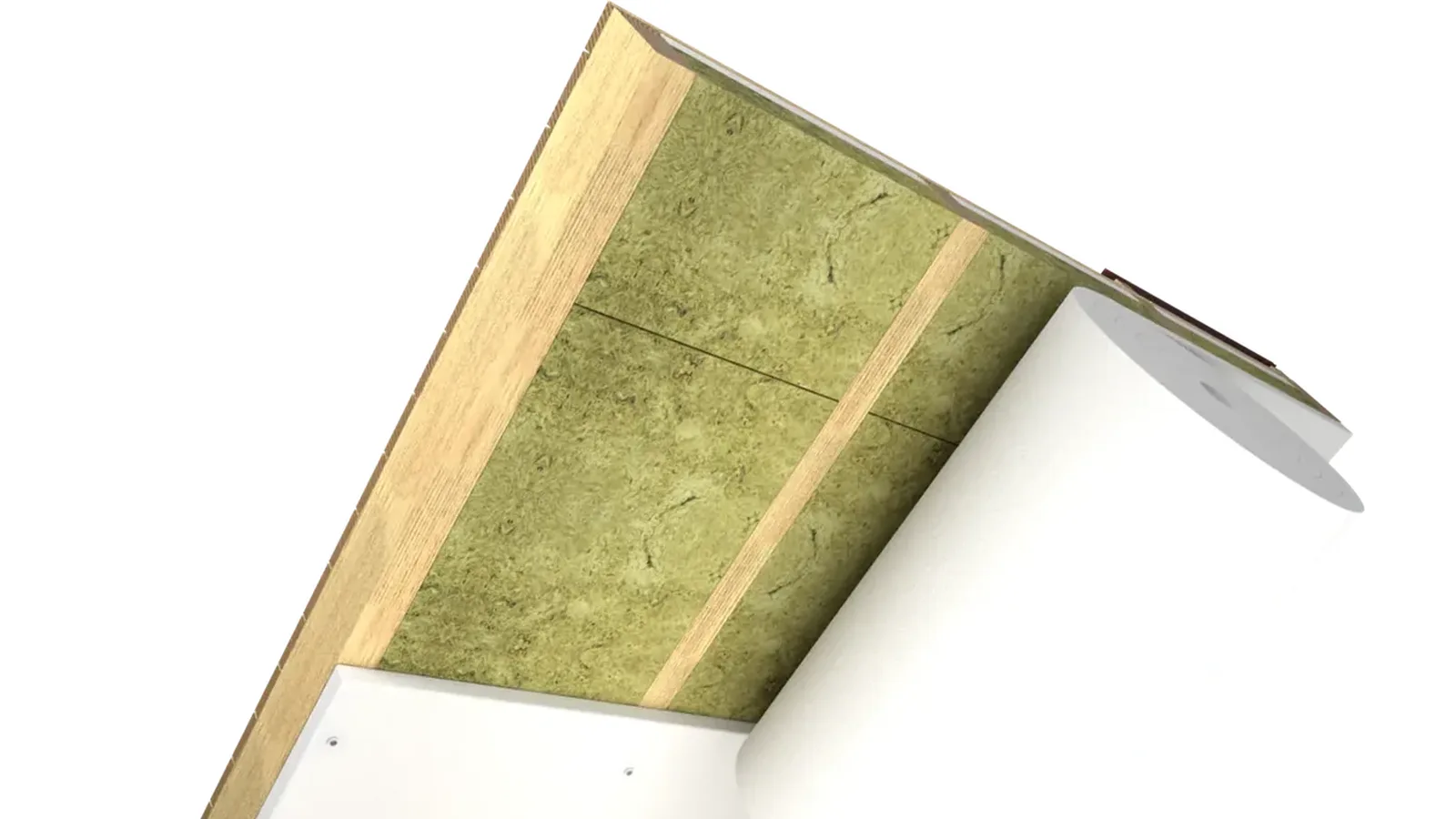
A habitable attic that overheats in summer, loses heat rapidly in winter or amplifies the noise of rain generally has a system problem, not merely an insufficient thickness of insulation. WOLLE insulation is an ecological option for owners who seek thermal comfort, sound attenuation and a balanced behaviour of the walls or roof with respect to moisture. Correctly installed, it contributes to a living space that is more stable, quieter and better protected over the long term.
What WOLLE insulation is and where it delivers results
WOLLE thermal insulation wool is made from recycled PET fibres, without binders, formaldehyde or phenol, and is intended for thermal insulation and sound absorption in buildings. The fibrous structure retains air, and still air is one of the elements that limit heat transfer through the building envelope. The intended result is simple: less heat lost through the roof, walls or floor slabs and an indoor temperature that is easier to maintain.
The material is particularly suitable for habitable attics, unheated attics, partition walls, lightweight timber structures and interior walls where acoustic insulation matters as much as thermal protection. In an A-frame house or a habitable attic with exposed rafters, the wool can efficiently fill the spaces between the structural elements without turning the work into a heavy and rigid system.
Real performance, however, is not reduced to the name of the material. The thickness chosen, the thermal conductivity Lambda declared for the product, the continuity of the insulating layer and airtightness directly influence the result. A high-performance wool installed with uncovered joints or pierced by gaps around building services cannot compensate for workmanship errors.
Why WOLLE insulation matters within a complete system
WOLLE is inert to moisture and to repeated wetting and drying cycles, and does not settle. This does not mean, however, that the material eliminates the need for vapour control or for protection against infiltration.
A roof covering that allows water to penetrate, a membrane installed the wrong way round or an unsealed vapour barrier may produce hidden condensation in the insulation layer. Over time, moisture may affect the timber, the finishes and the energy efficiency of the entire building. For this reason, in roofs and habitable attics, the wool must be regarded as part of a correct build-up: roof covering, ventilated space where necessary, diffusion membrane, insulation, vapour control layer and careful sealing at overlaps, edges and penetrations.
This is where the difference lies between an installation that merely “has insulation” and one with certain and predictable performance. The materials must work together, each with a clear function. The diffusion membrane protects against water and wind from the exterior, the interior layer limits the uncontrolled transport of vapour, and the sealing accessories reduce air movement through joints. WOLLE insulation can do its job when it is not expected to remedy the problems of the system on its own.
Thermal comfort in winter and protection in summer
In the cold season, the insulating layer reduces the flow of heat towards the exterior. The home can reach the desired temperature more quickly and maintain it for longer, which reduces the demand on the heating system. In a habitable attic, where the roof area is large relative to the volume of the room, this measure is particularly relevant.
In summer, insulation is not an air conditioner, but it slows the transfer of heat from the sun-exposed roof covering towards the interior. The effect depends on the thickness of the insulation, the ventilation of the roof, the shading of the windows and the capacity of the building to dissipate heat during the night. In a well-designed project, all these details contribute to more consistent comfort.
Attenuation of noise passing through walls and roofs
The flexible fibres of the wool contribute to the absorption of part of the sound energy travelling through cavities. For an interior wall, WOLLE wool insulation can reduce the perception of echo and can limit the transmission of conversations, sounds from building services or noise between rooms.
Nevertheless, sound insulation follows different rules from thermal insulation. If the objective is to limit impact noise from one storey to another or to achieve substantial acoustic separation between two spaces, mass, mechanical decoupling, correctly selected profiles and sealing details are also required. Wool insulation absorbs sound within the cavity, but cannot by itself eliminate the acoustic bridges created by a continuous rigid structure.
How to choose the appropriate thickness for the project
The choice of thickness starts from the installation area and the intended performance. For an interior wall, the requirement may be predominantly acoustic, and the space available between studs may determine the thickness. For a habitable attic or an unheated attic, the thermal objective is more demanding, and the insulation layer must be calculated in relation to the existing structure and the desired level of comfort.
Do not choose solely on the basis of the price per roll or per square metre. Two products of the same thickness may have different Lambda values, and the area actually covered must be assessed against cutting losses and the geometry of the roof. Rafters, joists, window openings, chimneys and junction areas increase the actual material requirement.
Before placing an order, verify four essential aspects:
- the available thickness in relation to the structural cavity;
- the Lambda value and the technical documentation of the product;
- the net area to be insulated, plus an allowance for cutting;
- compatibility with the membranes, tapes and interior finish selected.
Correct installation: the details that protect the investment
WOLLE wool insulation must be installed without gaps, without excessive compression and without unprotected areas at the edges. The material is cut so that it sits firmly between the rafters or studs, but without being packed in to the point of deformation. Compression can reduce the functional thickness and can affect the intended thermal behaviour.
Around cables, pipes and electrical boxes, the insulation is cut out carefully. Any space left uncovered becomes a local path through which heat may be lost or noise may be transmitted. Equally important are the junctions between the vapour control membrane and walls, roof windows, chimneys or building services. The appropriate sealing tape and the sleeves for penetrations are not optional accessories, but components that maintain the continuity of the interior layer.
Do not obstruct the ventilation provided for in the roof build-up. If the design includes a ventilated cavity beneath the roof covering, it must be kept clear along its entire path. Its role is to support the removal of moisture and to limit overheating of the outer layer of the roof.
When WOLLE wool insulation is the appropriate choice
WOLLE wool insulation is a relevant choice when the project places emphasis on ecological materials, acoustic comfort and a build-up that manages moisture responsibly. It is suitable for renovations in which the owner wishes to convert the unheated attic into a usable habitable attic, for lightweight walls between bedrooms or for timber structures where the flexibility of the material simplifies adaptation to existing dimensions.
It may not be the first option in every situation. Areas permanently exposed to water, spaces with special requirements for compressive strength or applications where the available thickness is extremely limited may require other materials or a combination of solutions. The correct choice starts from the position of the layer within the building, not from a single product criterion.
For a reliable result, regard insulation as an investment in the building envelope, not as a mere layer hidden beneath plasterboard. A configuration adapted to the habitable attic, the wall or the unheated attic can reduce heat losses, limit the risk of condensation and bring absolute comfort in every season. If you have doubts regarding the thickness, the membranes or the installation details, a technical recommendation before ordering can avoid costly interventions after finishing.